
2026-05-21 · Joe Root
How Austin Clay Soil Affects Home Foundations During Dry Spells
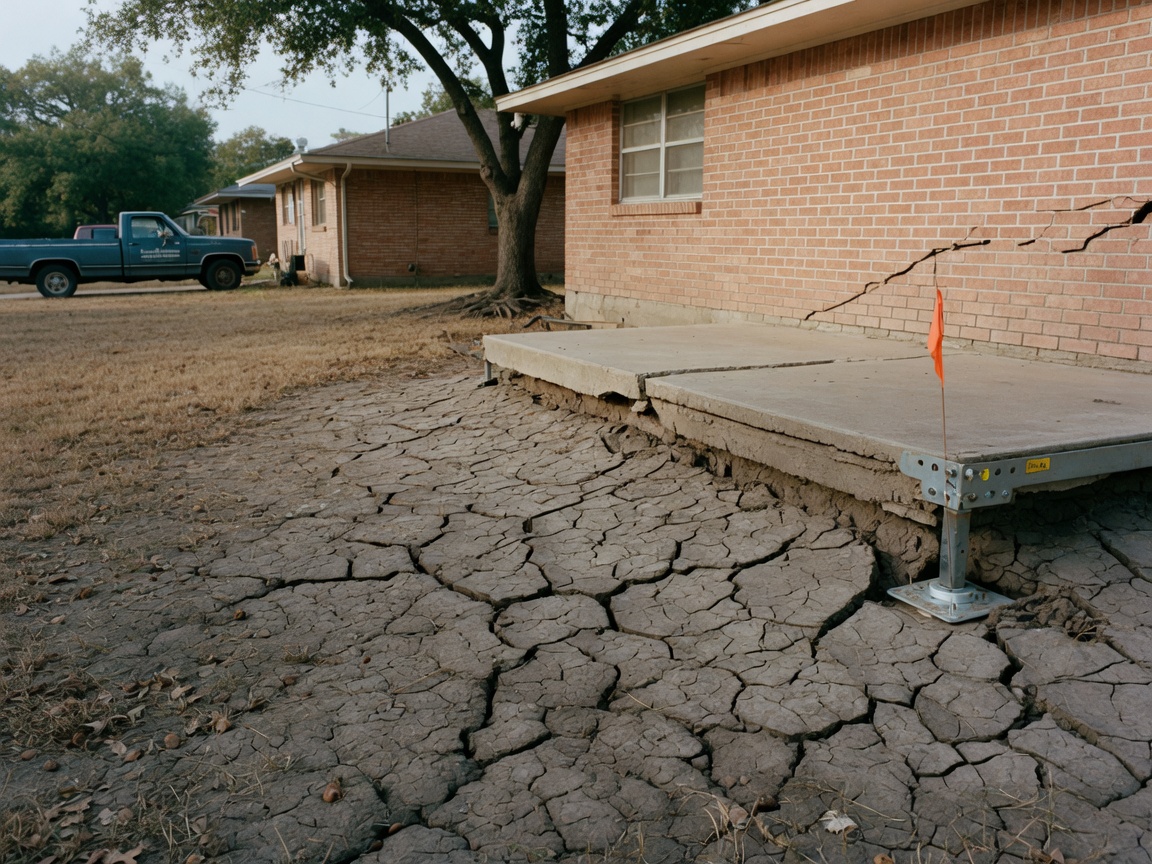
If you have lived in Austin through a few hot, dry summers, you may have noticed something odd. A door that used to close fine starts to stick. A thin crack shows up over a window. The floor in one corner feels a little off. Then it rains for a week and half of it seems to fix itself.
That back-and-forth is not your imagination, and it is almost never random. It is the soil under your house reacting to the weather. Once you understand what it is doing, it gets a lot easier to tell what is normal, what to keep an eye on, and when it is time to get someone out to look.
What is actually happening under your house
A lot of Austin sits on expansive clay. That is clay that soaks up water and swells when it is wet, then dries out, shrinks and cracks when it is not. Think of a sponge: full of water it is big and soft, dried out it is smaller and stiff.
Your foundation sits on top of that ground. When the soil swells and shrinks, it does not do it evenly. The edges of the house dry out faster than the middle, and the sunny side dries out faster than the shady side. So one part of the foundation can lose support while another part stays put. That uneven movement is what cracks concrete and brick and pulls door frames out of square.
In parts of the western side of the city there is shallow limestone as well, which makes the ground even less predictable from one end of a lot to the other. And big trees make it worse in a dry spell, because their roots pull moisture out of the soil right next to the house.
Why you usually see it on one side of the house
People often tell us the problem is "only on the back corner" or "just on the west side." That fits. The sides that get the most afternoon sun, the sides with no shade or gutters dumping in the wrong place, and the sides near big trees are the ones that dry out first. Those are the spots that tend to drop first.
The other thing that surprises people is timing. The movement is not always obvious while it is dry. A lot of folks notice it after the first big rain, when the soil swells back and the house shifts again. So a long dry spell followed by a heavy storm is exactly when new cracks and sticking doors tend to show up.
Signs to watch for during a dry spell
Here is what we would look for. None of these alone means you need a repair, but a few together is worth paying attention to:
- Doors and windows that start sticking, or that will not latch the way they used to
- Gaps opening up between the wall and the baseboard, or between the wall and the ceiling
- Small cracks in drywall, especially going out from the corners of doors and windows
- Stair-step cracks in brick, following the mortar lines
- Cracks in the garage floor or the slab, or tile that has started to crack
- A gap showing up between the soil and the edge of the foundation
- Floors that feel slightly sloped or bouncy in one area
Take a photo of anything you notice, put a date on it, and check it again in a few weeks. Whether a crack is growing is more important than how it looks on a single day.
Slab and pier-and-beam homes react differently
Most newer homes in the area are on a concrete slab. When the soil under the edge dries and drops, the slab can bend into a shallow bowl shape. You see it as cracks near the garage entry or along hallways, and doors that bind.
Older homes are often pier-and-beam, with the house sitting on posts over a crawl space. Here the piers can settle or lose contact with shrinking soil, and the beams between them can sag. That shows up as floors that slope or feel bouncy. If you have a crawl space, moisture and wood rot are part of the story too. Our page on pier and beam foundation repair covers what we look for.
What you can do yourself
You cannot stop the weather, but you can make the swings less extreme. These are the things that make a real difference:
- Keep the soil around the house evenly moist, not soaked. During long dry stretches, a soaker hose a foot or two from the foundation, run slowly, can help slow down how fast the soil shrinks. The goal is steady and gentle. A flooded bed against the foundation causes its own problems.
- Check where your water goes. Gutters should be clean, and downspouts should push water several feet away from the house, not dump at the corner.
- Watch the grade. The ground should slope away from the foundation. If soil has settled and now slopes toward the house, water collects exactly where you do not want it.
- Be careful with big trees close to the house. Roots go after moisture. If a large tree is within about 20 feet of the foundation, keep an eye on that side in dry weather.
- Fix plumbing leaks quickly. A slow leak under a slab can wash soil out and cause settling that looks just like drought damage.
If drainage is part of your problem, we explain how we fix it on our foundation drainage page.
When it is time to call someone
Seasonal movement is normal, and a lot of hairline cracks are cosmetic. It is time to have someone look when you notice:
- Cracks wider than about a quarter inch, or cracks that keep growing
- Stair-step cracks in brick, or cracks that run diagonally from corners
- Doors and windows that are getting harder to use month after month
- Floors that are clearly out of level
- Cracks that let water in
The simplest first step is a foundation inspection. We measure floor elevations, look at the cracks and check drainage, then tell you honestly whether you have a cosmetic issue or real movement. If it is real, the fix depends on the cause. It can be as simple as correcting drainage, or it may involve slab foundation repair, foundation settlement repair or foundation pier installation. And if you are mostly trying to understand what it might cost, we put together a plain-English guide on what influences foundation repair pricing.
It is not just an Austin thing
The same clay-and-weather story plays out across Texas, from Dallas and Houston to San Antonio. If you are in Austin, Round Rock, Cedar Park or Pflugerville, you are dealing with the same soil. You can see everywhere we work on our cities we serve page.
The short version
Clay soil moves with the weather, and dry spells pull it away from your foundation unevenly. Watch for sticking doors, new cracks and gaps, keep the moisture around your house steady, and keep water moving away from the foundation. If something keeps changing or keeps getting worse, get it looked at early. Small foundation problems are a lot easier and cheaper to deal with than big ones.
If you want us to take a look, give us a call. We are open Monday through Friday, 8am to 6pm, and we are happy to talk through what you are seeing before anyone comes out.