
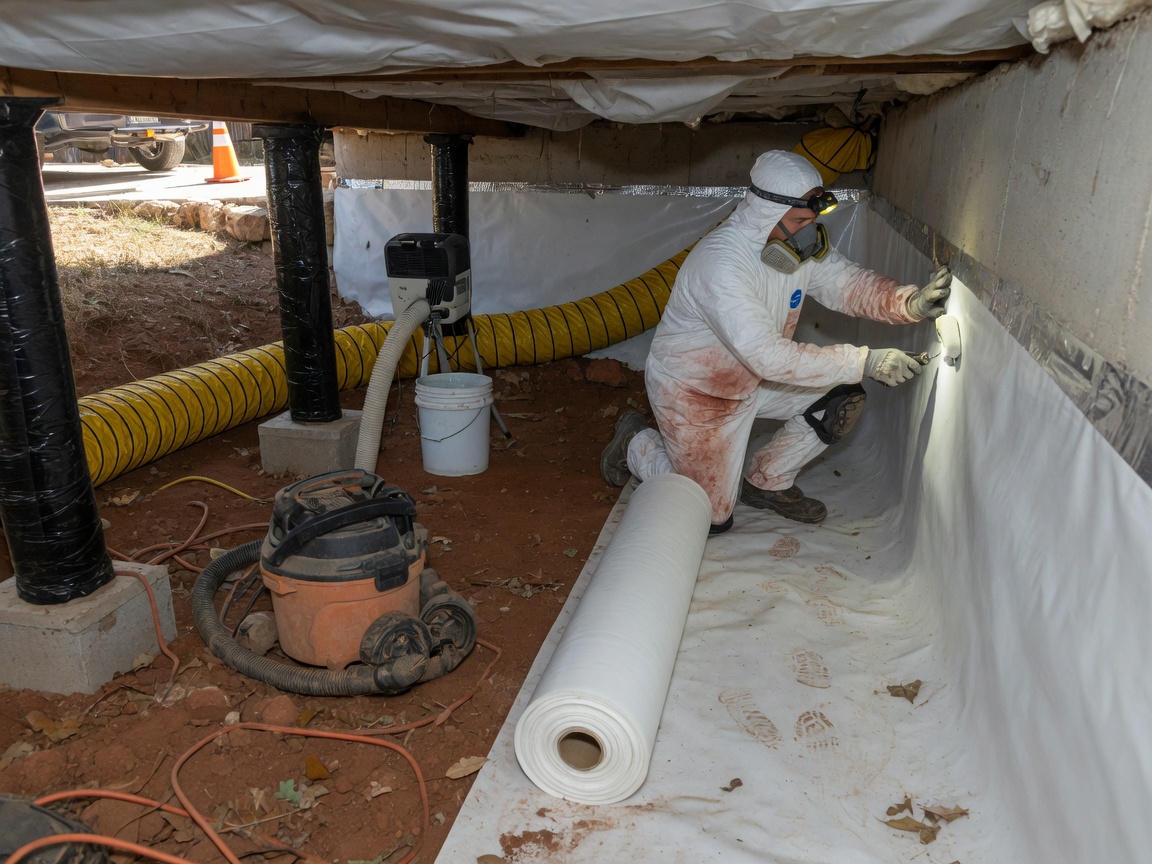
Austin's hot humid summers drive constant moisture into crawl spaces beneath homes built before the 1980s in neighborhoods such as Hyde Park, Clarksville, and Travis Heights. These older structures often sit on expansive clay soils common across Travis County that swell and shrink with seasonal water changes, stressing slab and pier foundations. Encapsulation installs a sealed vapor barrier, insulation, and dehumidification to stabilize humidity levels below 55 percent, reducing the risk of wood rot, mold, and differential settlement that shows up first near Barton Hills and Zilker Park properties.
Edge cases appear regularly in East Austin and Mueller homes where poor original grading allows runoff from spring rains to pool under the structure. Technicians must address low clearance, active plumbing leaks, and pest entry points while tying the new liner to existing foundation vents and sill plates without disturbing nearby utilities. In Westlake and Round Rock properties with steeper lots, integrated French drains or sump systems are often required before the barrier goes down to keep water moving away from the footing.
Code notes in Austin require that any work altering ventilation or adding electrical for dehumidifiers meet current residential building standards, especially when homes sit close to Lady Bird Lake or Mount Bonnell slopes. Homeowners should expect the crew to document existing conditions with photos and provide a written scope that covers access limitations and material specifications before work begins. Skipping these steps frequently leads to callbacks when humidity rebounds after the first mild winter.
Technician insight
In Austin the thing that catches most people out with crawl space encapsulation is how quickly clay soils around East Austin and Pflugerville homes reintroduce moisture once the barrier is in. Homeowners often skip tying the liner properly to the foundation wall and then wonder why humidity climbs again after the first heavy spring rain.
Clarksville Crawl Space Moisture
An older home near the Texas State Capitol showed settling cracks after several humid summers. Inspection revealed standing water and high readings under the floor. We installed a sealed liner, added a dehumidifier, and sealed all vents. The foundation movement stopped and interior humidity stabilized.
Crawl Space Encapsulation Services We Offer
✓Vapor Barrier Installation
Heavy-duty reinforced liner sealed to foundation walls and piers stops ground moisture from entering crawl spaces common in South Congress and Downtown Austin homes.
✓Crawl Space Insulation
Closed-cell spray foam or rigid board applied to rim joists and walls maintains stable temperatures year-round in older Hyde Park and Clarksville houses.
✓Dehumidifier Installation
Whole-crawl-space units sized for Austin humidity levels remove excess moisture and protect nearby foundation elements in Barton Hills properties.
✓Pest Entry Sealing
All vents, gaps, and utility penetrations are closed with metal mesh and sealant to block rodents and insects that thrive in moist Travis County crawl spaces.
✓Sump Pump Integration
Battery-backed pumps and drainage channels are added under the liner to handle seasonal runoff affecting East Austin and Mueller foundations.
✓Crawl Space Cleaning and Mold Treatment
Removal of standing water, debris, and surface mold precedes encapsulation on homes near Zilker Park where prior leaks have occurred.
Crawl Space Encapsulation Cost in TX
| Service | Typical Range | What Affects It |
|---|---|---|
| Basic Encapsulation (under 1,000 sq ft) | $3,200–$4,800 | Access and existing moisture level affect final cost |
| Full Encapsulation With Dehumidifier | $5,500–$8,200 | Larger homes in Westlake or near Lady Bird Lake often need this |
| Sump Pump And Drainage Add-On | $1,800–$3,100 | Required on sloped lots in Barton Hills or Zilker |
| Mold Treatment Before Encapsulation | $900–$1,600 | Depends on extent found during inspection |
Ranges are typical for TX and confirmed with an exact written quote before any work starts.
How it works
- 1
Site Evaluation
Technician inspects access, moisture readings, soil conditions, and foundation exposure in the specific Austin neighborhood.
- 2
Preparation
Remove debris, address active leaks, and grade the crawl space floor for proper liner adhesion.
- 3
Barrier And Insulation
Install sealed vapor barrier, rim joist insulation, and any required drainage components.
- 4
Sealing And Equipment
Close all penetrations, install dehumidifier if needed, and verify humidity control.
- 5
Final Walkthrough
Review completed work with homeowner and explain maintenance steps for Austin climate cycles.
Pricing
Pricing varies by home size, crawl space access, and whether drainage or dehumidification is required.