
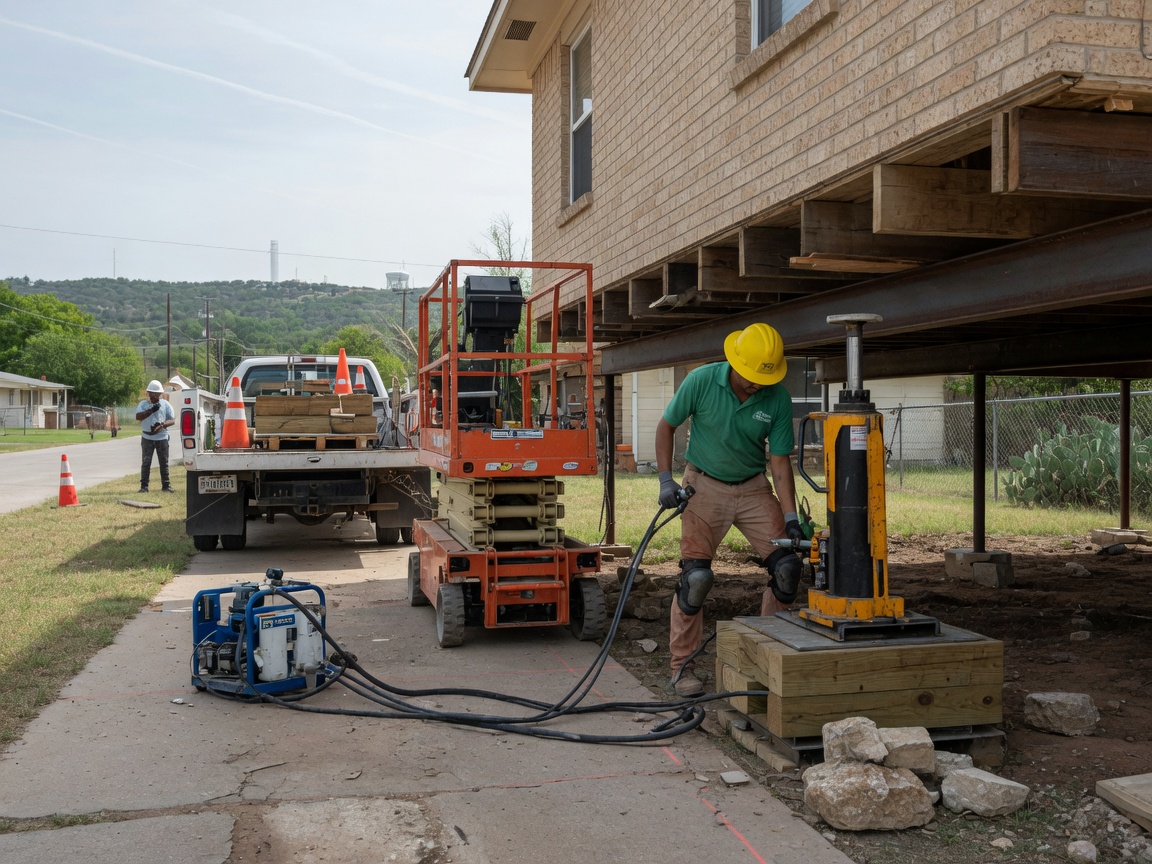
Homes near the Alamo and River Walk in Bexar County often need house leveling when hot summers dry expansive soils under pier and beam foundations. Properties along I-35 and US-281 face added stress from drainage patterns and mild winter rains that keep ground moisture uneven. Local crews stabilize older limestone-influenced stock common around the San Antonio Zoo without altering the area's historic character.
House Leveling in San Antonio — What We Handle
- ✓Work near River Walk tourism zones requires tight scheduling around daily foot traffic.
- ✓Focus stays on clay movement patterns that intensify only during San Antonio's extended hot seasons.
- ✓Stabilization techniques adapt to the mild winters that limit freeze damage but allow persistent moisture issues.
House Leveling Services We Offer in San Antonio
✓Slab Lifting
Foam or grout injection to raise settled slab sections.
✓Pier-Based Leveling
Piers placed to carry the load and bring low areas back up.
✓Pier and Beam Releveling
Adding, replacing and shimming piers under raised foundations.
✓Drainage Correction
Gutter, grading and drain work to reduce repeated movement.
When a House Needs Leveling
House leveling corrects uneven floors that come from foundation settlement. Signs include floors that slope or feel bouncy, doors and windows that stick, gaps at trim and cracks in drywall or brick. In Texas, these problems usually trace back to expansive clay that moves with the weather, or to moisture problems around the foundation.
How It Works in San Antonio
- 1
Elevation Survey
We measure floor elevations to see where and how much the structure has settled.
- 2
Plan and Quote
We choose the method for your foundation type and give you a written scope and price.
- 3
Lifting and Support
We raise the low areas in small steps and place supports to hold the new elevation.
- 4
Final Check
We re-measure elevations and review the results with you.
Serving All of San Antonio
We regularly handle house leveling jobs near:
- The Alamo
- River Walk
- San Antonio Zoo
- King William Historic District
- Alamo Heights
House Leveling Pricing in San Antonio
National average estimates are shown for reference. Call us for exact pricing for your home and location.
Want the full picture of this service? See our House Leveling page, or everything we do in San Antonio, TX.